
Move beyond temporary fixes and address the root cause of your sleep concerns. Finding a qualified Obstructive Sleep Apnea ENT Specialist in Singapore is essential for identifying the underlying causes of restricted airflow and ensuring long-term health.
At our snoring treatment clinic in Singapore, we provide evidence-based assessments and personalised management plans to help you achieve restorative rest.
For parents concerned about their child's breathing difficulties or snoring, we also offer specialised guidance from a paediatric sleep apnea specialist to support healthy growth and development. Our goal is to provide the clinical clarity you need to make informed decisions for your family's well-being.
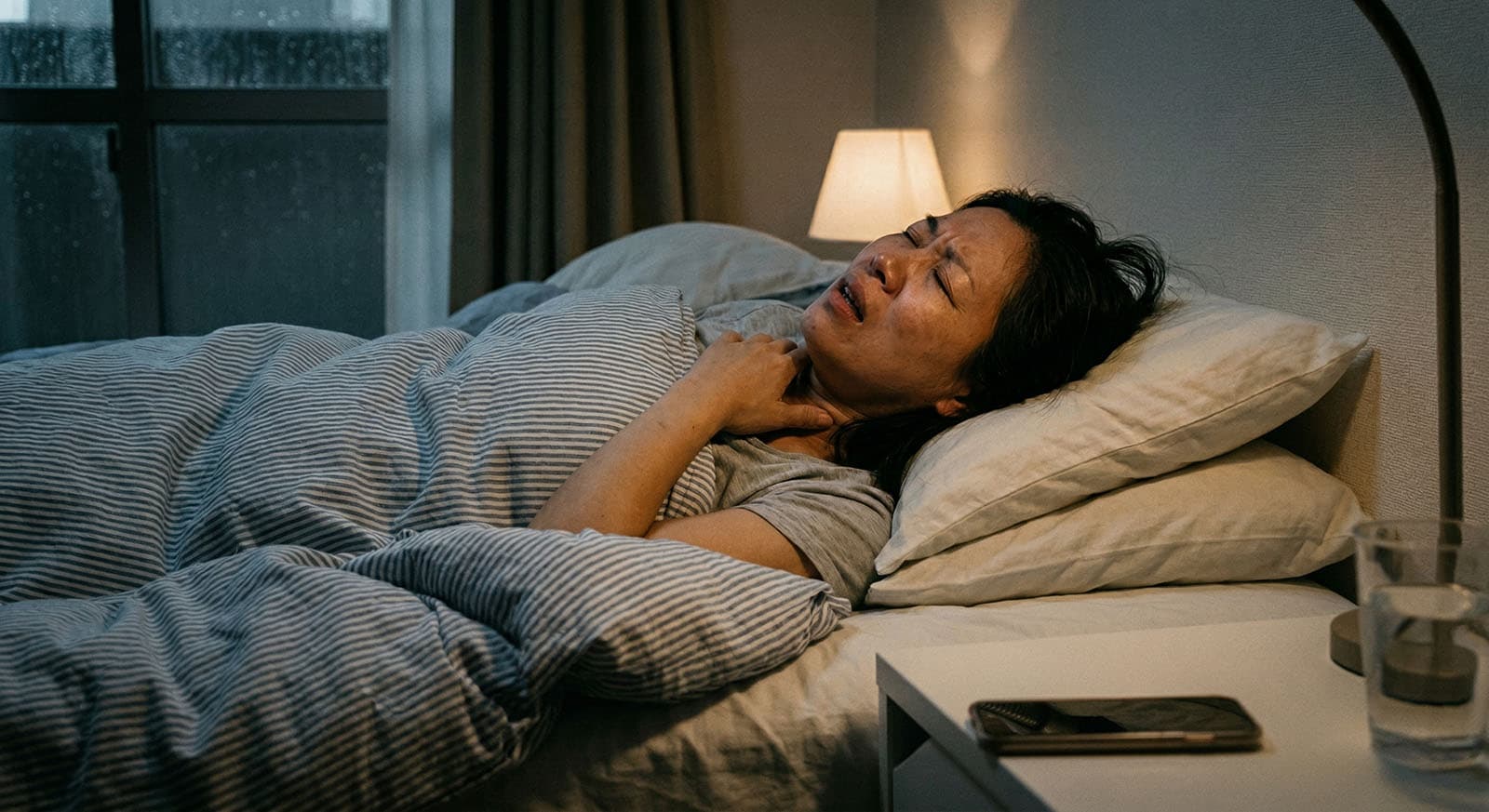
Obstructive Sleep Apnea (OSA) is a common condition in which the muscles and soft tissues in your throat relax, causing your airway to repeatedly narrow or collapse completely during sleep, thereby disrupting airflow to the lungs.
In turn, your diaphragm and chest muscles have to work extra hard to reopen the airway. You may rouse awake — sometimes hundreds of times throughout sleep — as you resume breathing; during which, you may experience gasping or jerking.
This not only disrupts sleep, but also places stress on vital organs to sustain oxygen flow. As a result, patients with OSA often do not reach deep, restful phases of sleep, and are likely to feel tired during their waking hours due to fragmented sleep.
The most concerning aspect of OSA is that many sufferers are entirely unaware of it. Because these micro-awakenings are so brief, you will likely not remember waking up to catch your breath. This is why seeking an accurate diagnosis from an experienced sleep apnea ENT specialist in Singapore is a critical first step. Identifying the exact cause of your airway obstruction allows us to map out the safest, most effective snoring treatment options in Singapore to protect your long-term health.
Obstructive Sleep Apnea (OSA)
As outlined previously, this is by far the most common form. It occurs when the tone of the muscles at the back of the throat relaxes excessively during sleep, leading to a physical blockage of the upper airway.
Central Sleep Apnea (CSA)
Unlike OSA, this type is not caused by anatomical obstruction of the airway. Instead, Central Sleep Apnea occurs when your brain temporarily fails to send the correct electrical signals to the muscles that control breathing.
Complex Sleep Apnea Syndrome (Mixed Sleep Apnea)
Also known as treatment-emergent central sleep apnea, this condition is a combination of both obstructive and central sleep apnea.
OSA can be caused by a person's physical structure or existing medical conditions:
Structural features, such as a thicker neck circumference, a proportionately larger tongue, or a shorter lower jaw than the upper, can significantly increase the risk of airway collapse.
Fat deposits around the upper airway can physically compress the passage and obstruct breathing. Additionally, individuals dealing with obesity may suffer from obesity hypoventilation syndrome, a secondary breathing disorder known to exacerbate sleep apnea.
This is a particularly common cause of sleep disruption in children. If you notice your child consistently mouth-breathing, gasping, or snoring at night, seeking an assessment from a paediatric sleep apnea specialist in Singapore is vital to ensure their sleep quality and cognitive development are not compromised.
Endocrine disorders, such as hypothyroidism and polycystic ovary syndrome (PCOS), as well as chronic lung diseases like asthma and chronic obstructive pulmonary disease (COPD), can negatively impact respiratory function during sleep.
Conditions affecting neuromuscular control can lead to weakened upper airway dilator muscles or reduced diaphragmatic strength. Furthermore, severe systemic issues like heart or kidney failure can cause fluid buildup (oedema) in the neck, further obstructing the airway.
Physiological changes during pregnancy, including fluid retention leading to upper airway edema and respiratory-driven shifts, can temporarily predispose women to OSA.
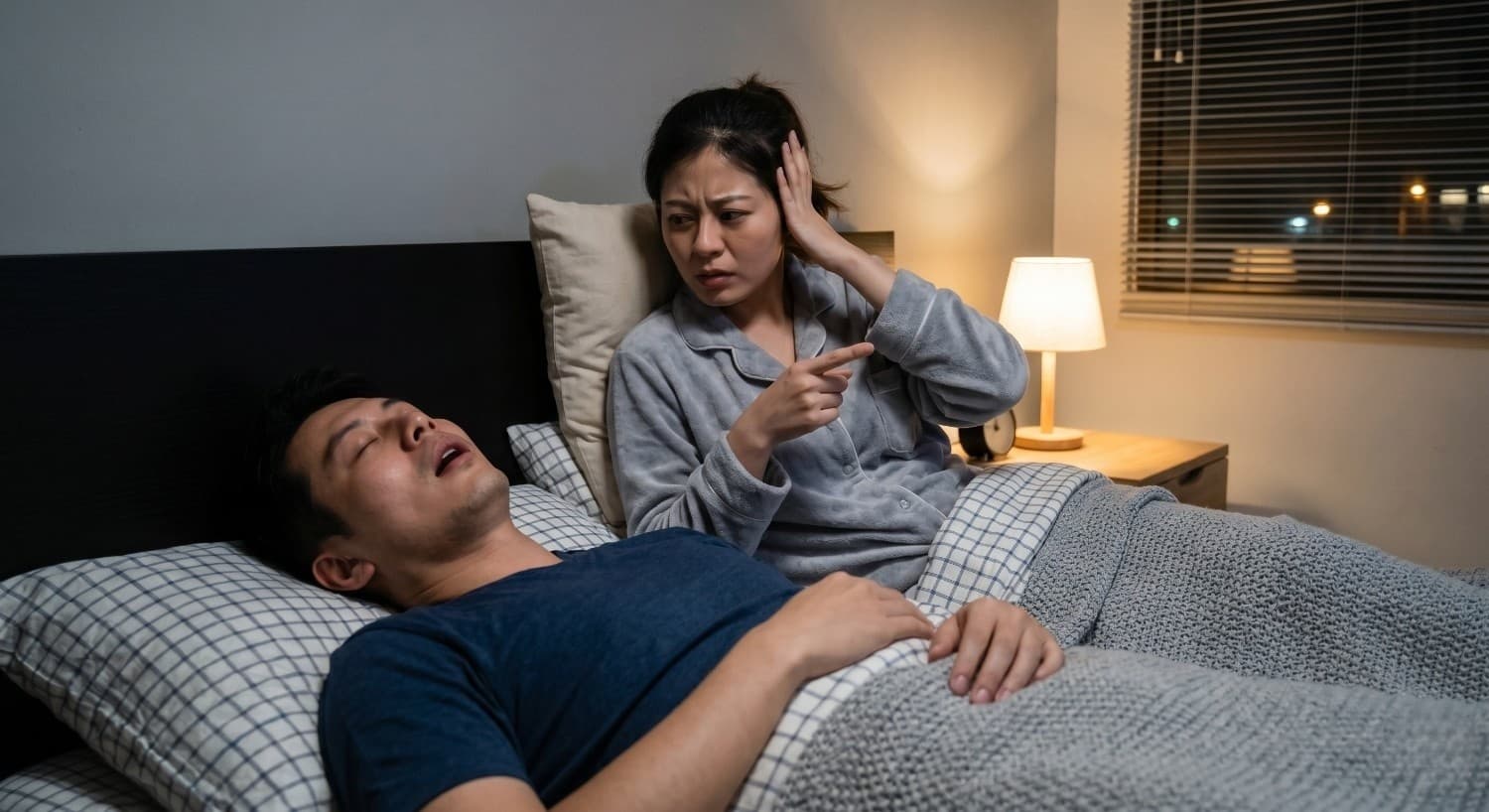
If you have OSA, you are likely to snore loudly and heavily soon after falling asleep. The snoring may then pause for a while, but may then be followed by a loud snort and gasp, as you attempt to breathe. This pattern then repeats itself throughout the night. People with OSA, however, are unlikely to be aware of their sleeping pattern, and it is more often that a partner or family member notices it first.Other symptoms include:
Daytime fatigue due to disrupted sleep
A dry mouth or sore throat, and/or a headache when you wake up in the morning
Trouble concentrating, forgetfulness, or irritability
Waking up multiple times in the middle of the night to go to toilet
Night sweats
Sexual dysfunction
Restlessness during sleep
High blood pressure
Gastroesophageal reflux disease (GERD)
The symptoms in children may be less clear but include: wetting the bed, choking or drooling or grinding their teeth in their sleep, perspiring a lot at night, unusual sleeping positions, restlessness during sleep, sluggishness or sleepiness, and learning and behavioural problems, including hyperactivity with reduced ability to concentrate on completing a given task.
Although OSA itself does not cause any pain, it can lead to serious complications like hypertension or stroke. It is important that you consult a doctor if you exhibit a number of these symptoms.
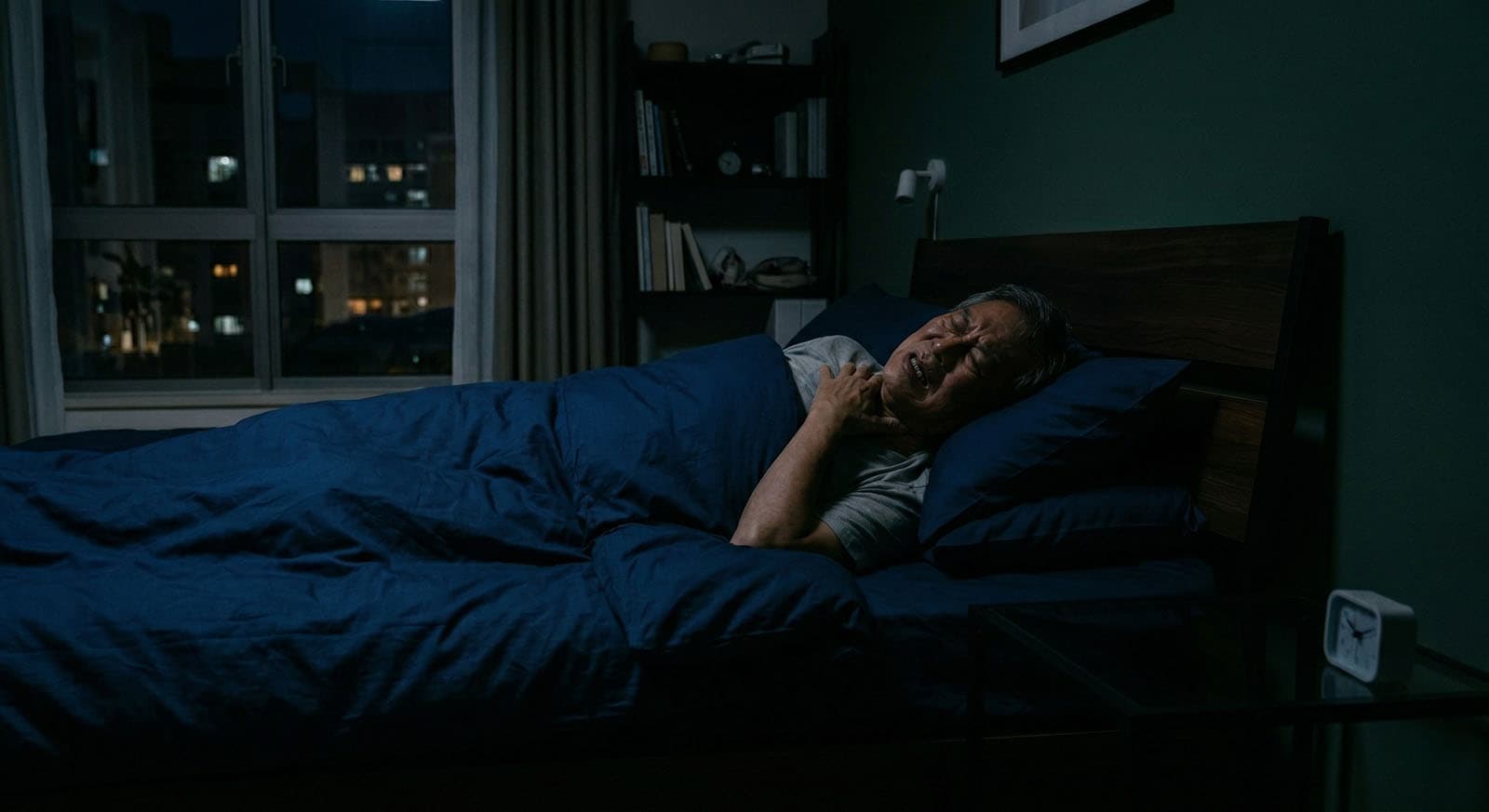
In Singapore, overweight male individuals in the middle age group onwards are more likely to suffer from OSA. Cases are also more prevalent in the Chinese population likely due to certain bone features that are more common within that ethnic group, followed by the Malays and Indians.
Here, 15% of the population experience sleep apnoea, and the prevalence may have increased with the rise in other health-related trends, such as physical inactivity and obesity. The prevalence of OSA is also expected to rise in tandem with the ageing of our population, which is also a factor in OSA.
The initial assessment of OSA involves a history and physical examination. You will be asked about daytime fatigue, sleep habits, and sleep quality to identify any noticeable symptoms. You will also be checked for physical telltale signs.
After the initial assessment, which includes nasal endoscopy to evaluate the upper airway, we will then arrange for an overnight sleep test (polysomnography or PSG) using multiple channels to monitor several physiologic variables. Any abnormal patterns of physiologic variables may point to sleep-disordered breathing. These sleep studies can be arranged to be done in your own home, where the team will come and set up everything for you.
The PSG will measure the activity of various organ systems while you sleep. It usually involves a combination of an electroencephalogram (EEG), electrooculogram (EOG), electromyography (EMG), electrocardiogram (ECG), and pulse oximetry. Together, these tools monitor your brain wave activity to determine light or deep sleep, rapid eye movement, periodic leg movement, heart rate and rhythm, and blood oxygen levels.
As you reach deep sleep, you should experience decreased muscle tone and paralysis (as indicated by our brain waves and eye movements). Along with decreased muscle tone, our muscles should also relax. Our heart rate and rhythm should slow, and our oxygen levels should be lower.
The treatment plan prescribed will depend on a comprehensive analysis of your sleep study, the severity of your symptoms, and specific factors such as your age, BMI, and unique upper airway anatomy. As an experienced sleep apnea ENT specialist in Singapore, our primary clinical goal in treating OSA is to ensure sustained, unobstructed airflow throughout your sleep cycle.
We offer a comprehensive range of snoring treatment options in Singapore, tailored to your exact needs:
Often considered the gold standard and first line of treatment, CPAP therapy utilises a specialised face mask worn during sleep. It delivers a continuous, positive airflow that acts as an invisible splint to keep the airway open.
While CPAP is highly effective for moderate to severe OSA, it may not be necessary or well tolerated in patients with mild OSA.
These non-invasive ventilators dynamically adjust the delivered air pressure in response to your natural inhalation and exhalation patterns, facilitating easier, more natural breathing.
Sleeping flat on your back can let gravity exacerbate airway collapse. Positional therapy involves sleep training and specialised devices designed to help you remain sleeping on your side, which can significantly reduce the severity of OSA for some individuals.
For patients with obesity, medically guided weight loss has been shown to reduce the severity of OSA. Reducing fatty tissue around the upper airway minimises physical obstruction, which can dramatically improve your overall quality of life and reduce daytime fatigue.
In cases where non-invasive methods fail to provide adequate relief, or when there is a specific, correctable anatomical issue (such as an obstructing lesion, deviated septum, or enlarged tissues), surgery may be considered.
The estimated hospital bill for surgical snoring and OSA treatment in Singapore typically can be up to $30,000, depending on the complexity of the airway procedure and your chosen hospital class.
To ensure complete transparency and eliminate the anxiety of a “Financial Black Box,” our clinic provides dedicated administrative support to help you navigate Letters of Guarantee (LOG) and Integrated Shield Plan claims prior to your admission.
up to
$30,000
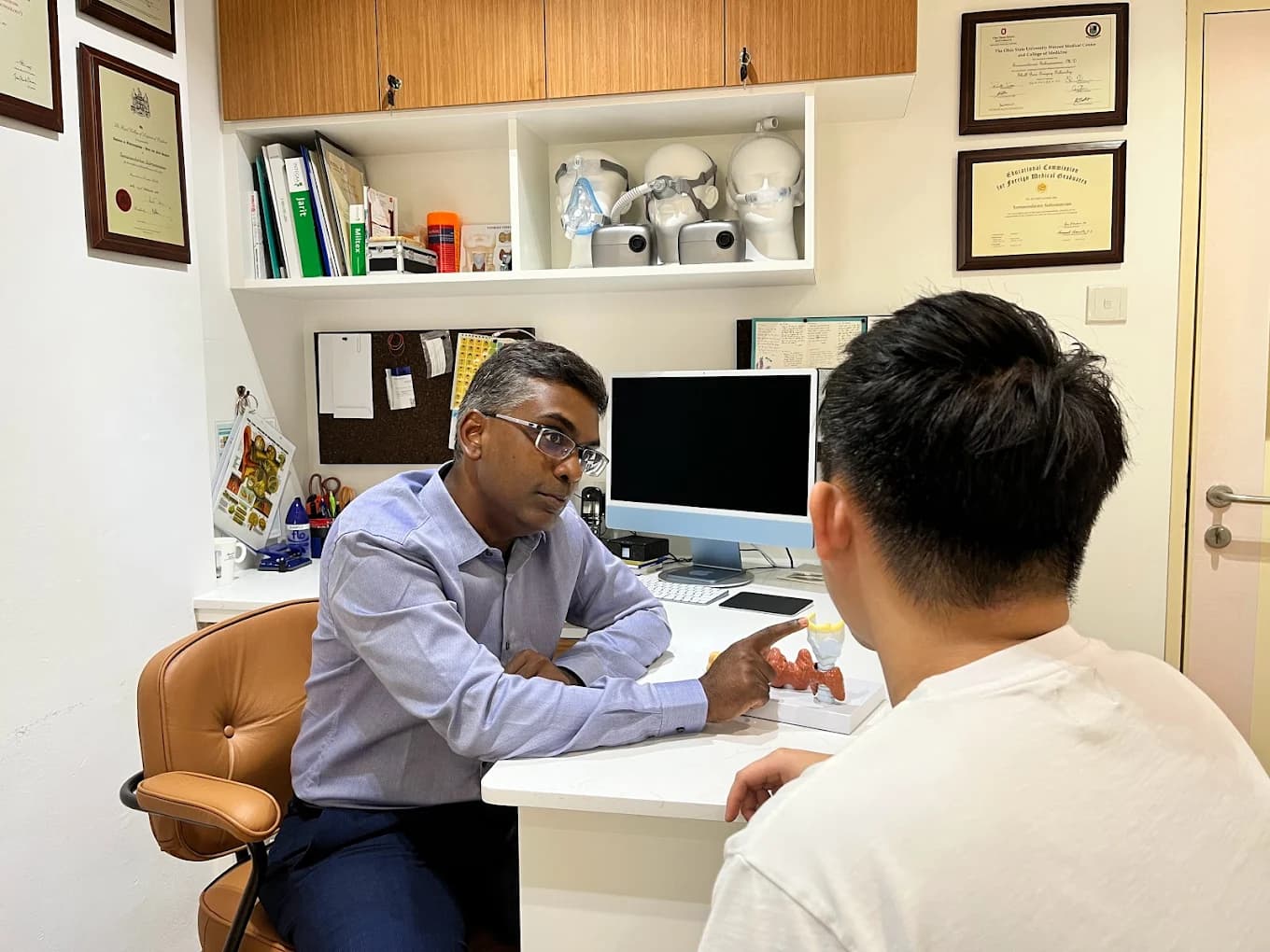
Dr. Soma is a Senior Consultant ENT Specialist exclusively accredited by the Singapore Ministry of Health and the Singapore Medical Council. He brings over two decades of clinical experience and possesses a unique medical background, having trained extensively across European, North American, and Singaporean medical systems.
Leveraging his elite sub-speciality fellowship training in the USA, Dr. Soma employs advanced, minimally invasive techniques for airway optimisation. As an experienced sleep apnea ENT specialist in Singapore, he prioritises precision-based interventions that clear obstructions effectively while maximising tissue preservation and minimising post-operative discomfort.
Positioned as the definitive clinical solution for patients suffering from "Failed Fix Trauma," Dr. Soma regularly takes on complex revision cases. If you have previously undergone a snoring or airway procedure elsewhere that was unsuccessful, his advanced diagnostic approach is designed to uncover the root cause and resolve recurring blockages.
Our clinic acts as a dedicated administrative concierge, removing the stress and cognitive load of the insurance labyrinth. We seamlessly handle your Integrated Shield Plan claims, Letters of Guarantee (LOG), and Medisave paperwork for you, ensuring you experience complete financial transparency.
To ensure ease of access for high-functioning professionals and busy parents, our clinics are strategically located across the island at Paragon Medical Centre (Orchard) and Parkway East Specialist Hospital (Joo Chiat/East Coast).
From obtaining a Letter of Guarantee (LOG) from your insurer to securing a pre-authorisation certificate, we’ll do the necessary paperwork for you.
Shield Plans:





Corporate Plans:





A direct, focused clinical evaluation with Dr Soma, a Tier-1 Consultant ENT Specialist trained in advanced endoscopic techniques at The Ohio State University, USA.
Comprehensive diagnostic evaluations, such as targeted sleep studies or airway endoscopy, to precisely identify the root cause of your airway obstruction.
A personalised medical or surgical resolution plan designed to fix the structural blockages, restore deep sleep phases, and protect your long-term cardiovascular health.
A transparent financial counselling session where our team handles your Integrated Shield Plan claims, Letters of Guarantee (LOG), and Medisave paperwork for you.
If you are seeking a definitive assessment and exploring snoring treatment options in Singapore, our dedicated medical team is ready to provide advanced diagnostic expertise and seamless administrative concierge support.
An Ear, Nose, and Throat (ENT) specialist is highly qualified to diagnose and manage obstructive sleep apnea by directly examining structural blockages in your airway. A sleep apnea ENT specialist in Singapore is uniquely equipped to identify these anatomical issues and offer targeted medical or surgical solutions.
The 3% rule is a diagnostic metric used during a sleep study to track each time your blood oxygen level drops by 3% or more from your baseline. Each such drop is a significant event that is recorded and tabulated into the final sleep report. This clinical data helps your sleep apnea specialist in Singapore accurately determine the severity of your condition and formulate an evidence-based treatment plan.
The primary mechanical cause of Obstructive Sleep Apnea is the over-relaxation of throat muscles and soft tissues, which momentarily collapses the airway during sleep. An in-depth evaluation at a snoring treatment clinic in Singapore is necessary to pinpoint your exact anatomical, genetic, or lifestyle triggers, such as excess body weight.
Natural management strategies focus on targeted lifestyle modifications, such as medically guided weight loss, positional therapy, and avoiding alcohol before bed.
While loud, disruptive snoring is a primary symptom of Obstructive Sleep Apnea, not everyone who snores has the condition. It is important to consult an obstructive sleep apnea specialist in Singapore to rule out serious airway blockages and protect your cardiovascular health.
Paediatric snoring is often caused by enlarged tonsils or adenoids, nasal septal deviation, or turbinate hypertrophy, which can disrupt sleep and negatively impact a child's physical and cognitive development. A paediatric sleep apnea specialist in Singapore can accurately diagnose these physical blockages and recommend appropriate interventions to support healthy growth, including minimally invasive surgery, which can be performed as day surgery when needed.

ENT PLUS Specialist Centre Singapore
MBBCh (IRE) | DOHNS (ENG) | MMED-ORL (NUS) | FRCS-ORL (ENG)
Consultant ENT Specialist and Surgeon
Your Partner in Sinus, Allergy and ENT Health
Dr Soma Subramaniam is a MOH-accredited ENT specialist with fellowship training in endoscopic sinus and skull base surgery. He is Past President of the Singapore ENT Society and Founding President of the ASEAN Rhinologic Society. Dr Soma is committed to patient care, teaching, and advancing ENT knowledge through research and training the next generation of specialists.
321 Joo Chiat Place #05-01 Parkway East Specialist Hospital
Singapore 427990
Opening Hours
Monday–Friday: 9am – 5pm
Saturday: 9am – 12.30pm
290 Orchard Road #09-20/21 Paragon Medical Centre
Singapore 238859
Opening Hours
Monday–Friday: 9am – 5pm
Saturday: 9am – 12.30pm
Phone
+65 6517 9760
+65 6320 0310
(Calls only available during clinic opening hours)
+65 9856 8391
(Messaging only for appointment-related matters, no calls)
enquiry@entplus.sg