Get clear answers about your thyroid health from a qualified specialist. For those diagnosed with a malignancy, we provide evidence-based guidance on thyroid cancer surgery to ensure the most effective clinical outcome.
To help you plan your thyroid nodule surgery with confidence, we offer total transparency on the cost in Singapore and provide full administrative support for your insurance claims.
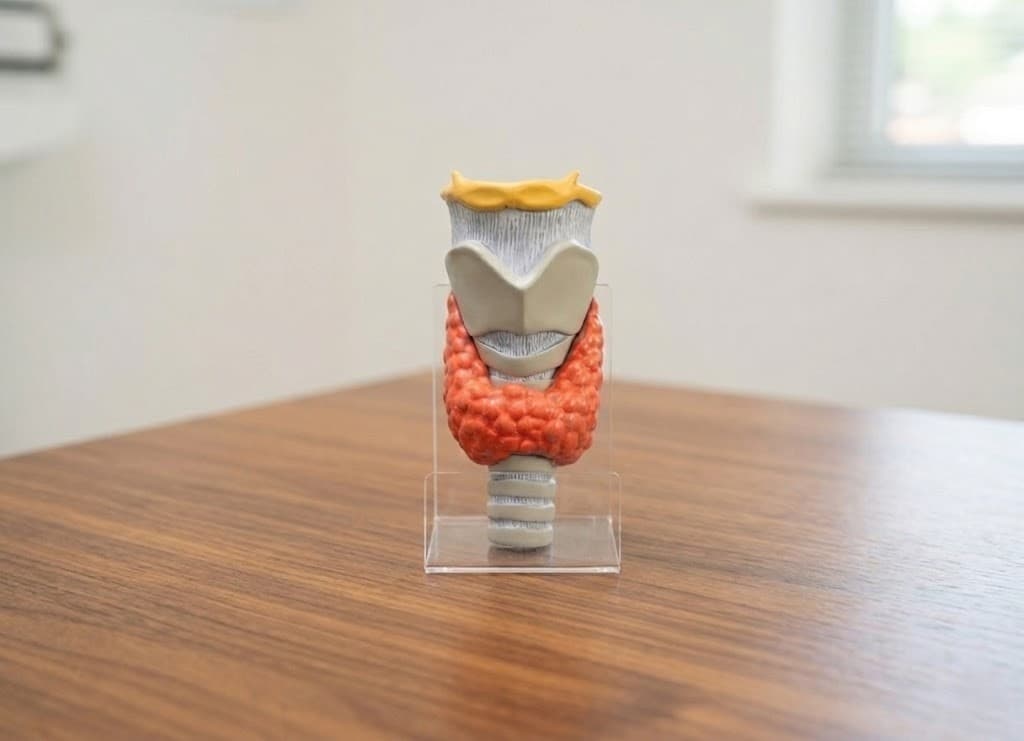
Thyroid cancer is a condition in which rogue cells in the thyroid gland multiply at a rate beyond the immune system's ability to manage. It first presents as a tumour or nodule in the thyroid gland, a small butterfly-shaped gland located near your voice box and in front of your windpipe, at the base of your neck and just above your sternum (chest).
In Singapore, thyroid cancer is the eighth most common cancer amongst women, with about 1,100 cases reported every year. Worldwide, thyroid cancer is the most common endocrine malignancy. This could be due to late detection as thyroid cancer often presents with unnoticeable symptoms until the tumour or nodule grows to a sizeable state.
There are several types of thyroid cancer, classified according to the kinds of cells found in the tumour.
The two most common types of thyroid cancer are papillary thyroid cancer and follicular thyroid cancer, accounting for about 95% of cases.
Other types of cancer include medullary thyroid cancer and anaplastic thyroid cancer, and the fairly rare thyroid lymphoma and thyroid sarcoma.
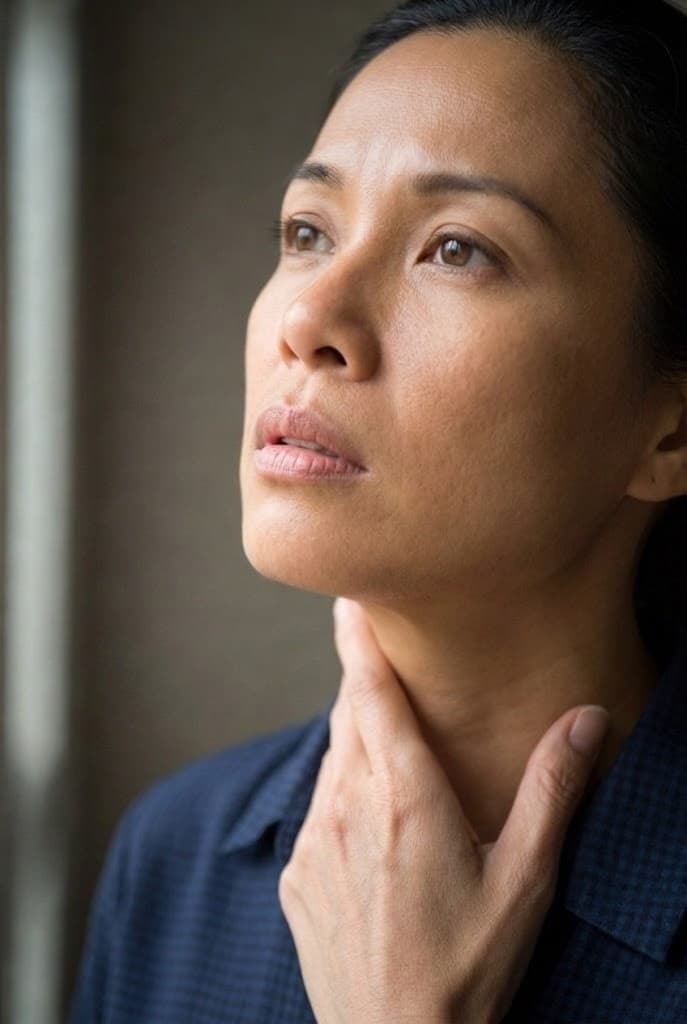
To diagnose thyroid cancer, your doctor will carry out what's called a Fine Needle Aspiration Cytology Biopsy (FNAC). You will lie on your back with your head tipped backwards. Ultrasound will be used to guide the accurate placement of the needle, so as to draw an accurate sample of the tumour.
The procedure itself would take about 10-15 minutes, and the sample drawn is smeared onto slides and then immediately sent to a cytology laboratory for testing.
There is no definite evidence to explain what causes thyroid cancer.
What is known is that thyroid cancer occurs when the cells in your thyroid gland mutate and multiply rapidly. As a result of these mutations, the cells become more hardy and do not die the way normal cells do.
The accumulation of abnormal cells in the thyroid forms a tumour or nodule. These cells can then invade nearby tissue and spread to other parts of the body.
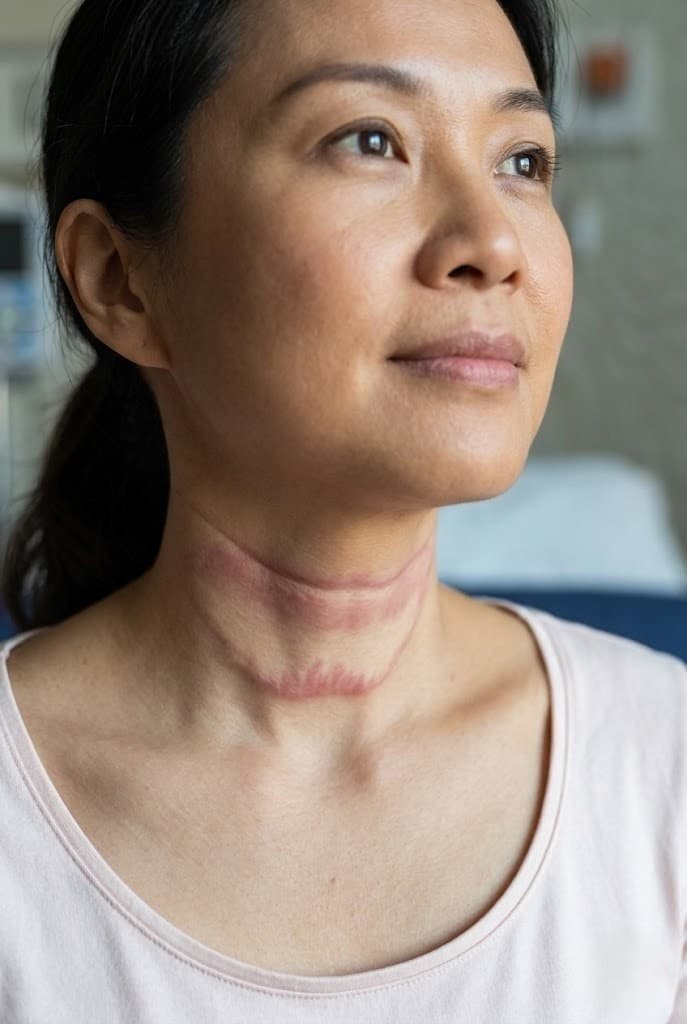
A visible lump or swelling at the base of the neck.
A "globus sensation" or the feeling of a lump in the throat.
Persistent unexplained vocal fatigue.
Chronic cough or irritation.
Difficulty or discomfort when swallowing.
Shortness of breath or pressure on the windpipe.
Cognitive fog or chronic fatigue is linked to thyroid dysfunction.
Heart palpitations or metabolic energy changes.
Our clinic provides a specialised diagnostic and surgical pathway for a broad range of thyroid anomalies, ranging from benign overgrowths to complex malignancies. Leveraging advanced expertise in head and neck surgery, we manage the following conditions:
Evaluation and surgical removal of non-cancerous lumps that may cause physical discomfort or pressure in the neck. Some nodules can be managed without surgery.
Treatment for enlarged thyroid glands containing multiple distinct nodules that may impact metabolic energy regulation or swallowing.
Focused surgical clearance for various types of thyroid cancer, including papillary and follicular carcinomas.
Specialised care for autoimmune thyroid disorders that may lead to surgical requirements.
Surgical management of benign tumours in the parathyroid glands, often discovered incidentally during clinical evaluations.
Addressing "Failed Fix Trauma" through revision surgeries for difficult cases that require Tier-1 specialist precision.
Understanding your risk factors is the first step toward proactive management and clinical clarity. While anyone can develop thyroid anomalies, research shows certain demographics are at higher risk:
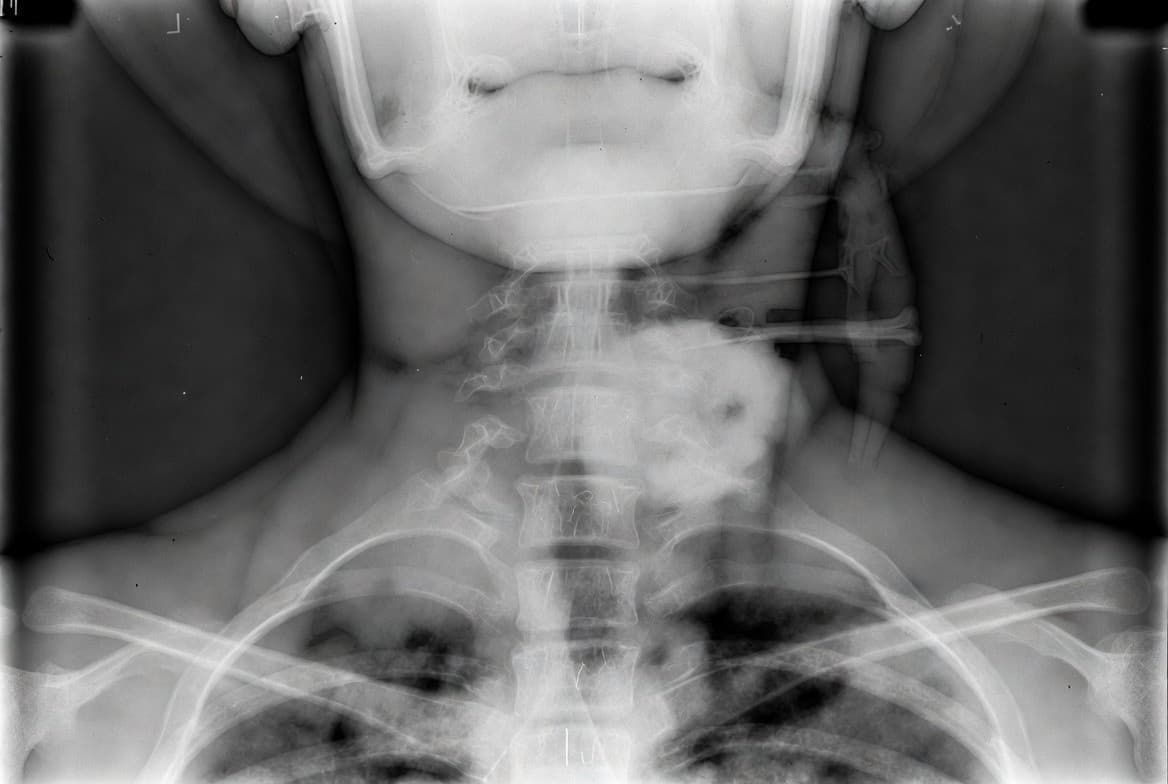
Thyroid cancer affects 1% to 2% of the population at some point in their lives. While the diagnosis can be daunting, modern medical advances mean that most cases are highly manageable, especially when caught early. Here is how thyroid cancer is treated, moving from diagnosis to full recovery.
Surgery is the gold standard for treating thyroid cancer. The goal is to remove the tumour and prevent it from spreading.
Total Thyroidectomy
The complete removal of the thyroid gland. This is often preferred even in early stages because it allows doctors to monitor for recurrence more accurately using blood tests later.
Hemithyroidectomy (Lobectomy)
Removal of only one half (lobe) of the thyroid. This may be an option for small, slow-growing cancers confined to one area.
Lymph Node Dissection
As there is a propensity for certain thyroid cancers to spread to nearby nodes in the neck, these are removed during the same procedure to ensure clinical "clearance".
Dr. Soma and other specialists utilise the latest surgical techniques, which optimise safety and cosmesis:
Traditional Open Surgery
A horizontal incision is made at the base of the neck.
About four weeks after surgery, patients with papillary or follicular cancer may receive radioiodine therapy.
How it works
You swallow a small amount of radioactive iodine solution (usually just once). Because thyroid cells are the only ones that "eat" iodine, the radiation targets and destroys any microscopic thyroid tissue or cancer cells left behind without harming the rest of your body.
Confirmation
A full-body radionuclide scan is often performed afterwards to confirm that no thyroid tissue remains.
Once the thyroid is removed, your body can no longer produce the hormones needed to regulate your metabolism.
Daily Medication
You will take a daily thyroid hormone pill (levothyroxine) for the rest of your life (if total thyroidectomy is performed).
The Double Benefit
This medication does more than replace your natural hormones; by keeping your hormone levels balanced, it also suppresses TSH (Thyroid Stimulating Hormone) production, which helps prevent the cancer from recurring.
Calcium Supplementation
In some cases, calcium supplementation may be needed. This may be stopped later if blood calcium levels are normal.
Remission is monitored through half-yearly check-ups that include blood tests and serum thyroglobulin measurements. While cancer can recur if cells spread before surgery, recurring cells can, fortunately, still be treated effectively.
from
$30,000
By utilising advanced surgical methods and dedicated administrative support, patients experience the following benefits:
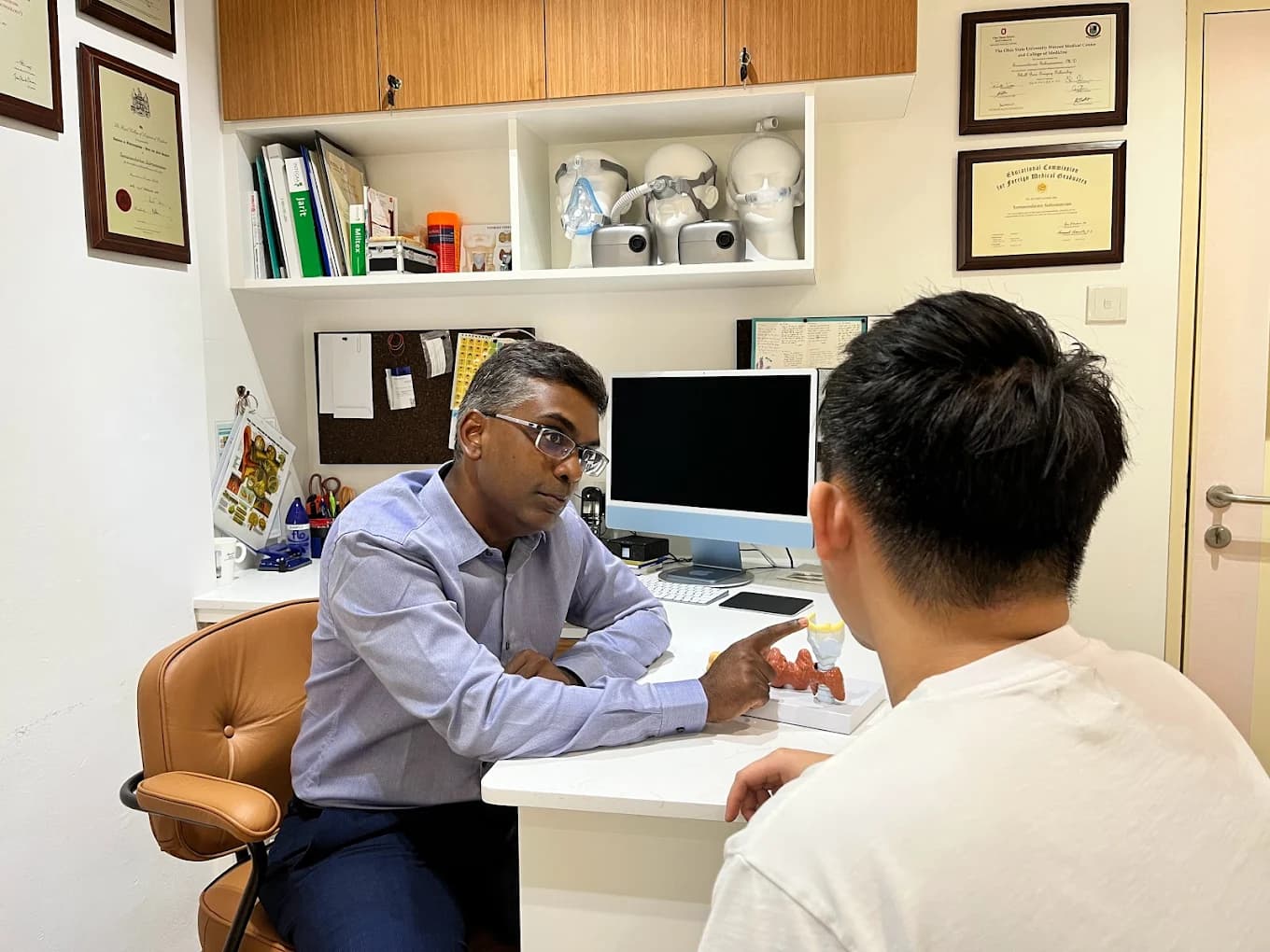
Dr. Soma is a Senior Consultant ENT Specialist exclusively accredited by the Singapore Ministry of Health and the Singapore Medical Council. He brings over 20 years of medical experience and a hybrid background across UK, North American, and Singaporean medical systems.
Dr. Soma was a pioneer in the Singapore public sector for scarless thyroid cancer surgery. He is specifically trained to utilise the latest surgical techniques, which optimise safety and cosmesis.
Positioned as the solution for the "Failed Patient," Dr. Soma manages tumour recurrences as well. He uses his sub-speciality fellowship training from the USA to resolve complex or recurrent thyroid nodules for those whose previous procedures elsewhere were unsuccessful.
We handle your Integrated Shield Plan claims, Letters of Guarantee (LOG), and Medisave paperwork, providing you with comprehensive financial empathy and transparency.
To ensure ease of access for busy professionals and multi-generational households, our clinics are strategically located across Singapore at Paragon Medical Centre (Orchard) and Parkway East Specialist Hospital (Joo Chiat/East Coast).

Recovering from thyroid surgery in Singapore requires a balance of clinical discipline and restorative care. Since the thyroid is situated near the larynx (voice box), these simple steps focus on protecting your function and regaining your energy:
In the first few days, avoid straining your vocal cords to prevent long-term fatigue or damage.
Replenish lost energy with blood-nourishing, high-protein broths, such as traditional black chicken soup brewed with ginger and red dates.
Thyroid surgery disrupts metabolic regulation, so pay close attention to signs of cognitive fog or chronic fatigue as your body adjusts.
Taking your prescribed thyroid hormone replacement daily is essential to prevent cancer recurrence and maintain your systemic vitality.
While light movement is encouraged, avoid heavy lifting or high-stress corporate situations for at least 2 weeks to allow internal tissues to heal.
Regular monitoring of your thyroid function and serum thyroglobulin is the only way to ensure you remain in complete remission.
From obtaining a Letter of Guarantee (LOG) from your insurer to securing a pre-authorisation certificate, we’ll do the necessary paperwork for you.
Shield Plans:





Corporate Plans:





A direct, focused clinical evaluation with Dr Soma, a Tier-1 Consultant ENT Specialist trained in advanced skull base and head and neck surgery at The Ohio State University, USA.
In-house diagnostic imaging and grading using specialised ultrasound to precisely evaluate your thyroid nodules and determine if you are a candidate for surgery that avoids traditional neck incisions.
A personalised surgical resolution plan designed to fix the structural issue while protecting your vocal cord function and preserving your natural appearance.
A transparent financial counselling session where our team handles your Integrated Shield Plan claims, Letters of Guarantee (LOG), and Medisave paperwork for you.
If you are seeking an assessment for your thyroid concerns through thyroid surgery in Singapore, our dedicated medical team is ready to provide the advanced surgical expertise and seamless administrative concierge support you demand.
Thyroid cancer is one of the more common endocrine malignancies in Singapore and is currently the eighth most common cancer among women, with approximately 1,100 new cases diagnosed each year. While its incidence is rising globally, it generally has a very high survival rate when identified and treated early by a specialist.
In Singapore, the cost of thyroid surgery typically can range from approximately $30-40,000. Most procedures are MediSave-claimable, and a significant portion of the cost is often covered by Integrated Shield Plans, depending on your specific rider.
Thyroid surgery is considered a major procedure as it is performed under general anaesthesia and typically takes between 1.5 and 4 hours to complete. While most patients can return home after a one-to-two-night stay, occasionally some patients stay an additional day or longer.
While temporary hoarseness or a "weak" voice can occur due to irritation from the breathing tube or potentially injury to the nerve supplying the voice box, permanent voice loss is extremely rare. Most patients regain their normal voice within a few days to weeks as the surgical area heals.
The procedure is performed under general anaesthesia, so you will not feel any pain during the surgery. Most patients report only mild discomfort or a sore throat afterwards, which is typically well-managed with standard oral painkillers.
ENT PLUS Specialist Centre Singapore
MBBCh (IRE) | DOHNS (ENG) | MMED-ORL (NUS) | FRCS-ORL (ENG)
Consultant ENT Specialist and Surgeon
Your Partner in Sinus, Allergy and ENT Health
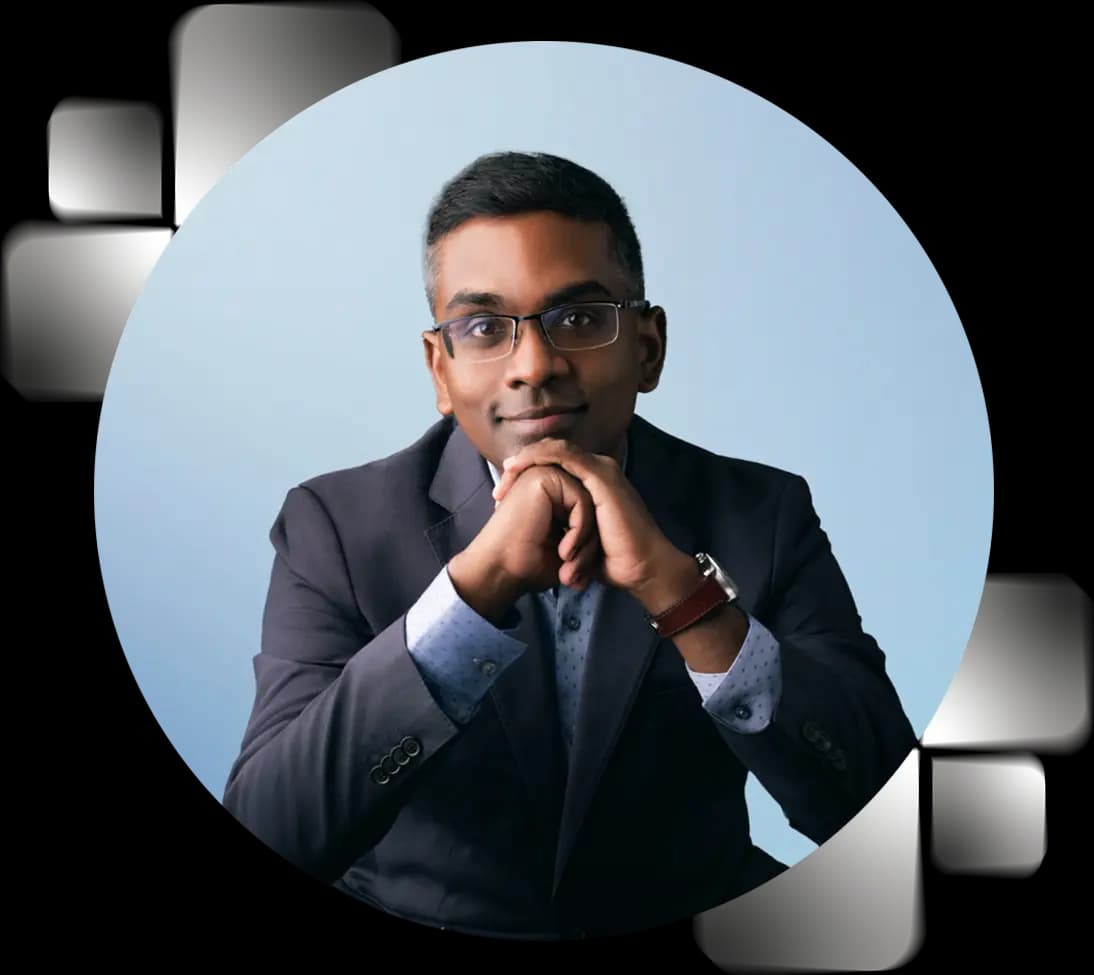
Dr Soma Subramaniam is a MOH-accredited ENT specialist with fellowship training in endoscopic sinus and skull base surgery. He is Past President of the Singapore ENT Society and Founding President of the ASEAN Rhinologic Society. Dr Soma is committed to patient care, teaching, and advancing ENT knowledge through research and training the next generation of specialists.
321 Joo Chiat Place #05-01 Parkway East Specialist Hospital
Singapore 427990
Opening Hours
Monday–Friday: 9am – 5pm
Saturday: 9am – 12.30pm
290 Orchard Road #09-20/21 Paragon Medical Centre
Singapore 238859
Opening Hours
Monday–Friday: 9am – 5pm
Saturday: 9am – 12.30pm
Phone
+65 6517 9760
+65 6320 0310
(Calls only available during clinic opening hours)
+65 9856 8391
(Messaging only for appointment-related matters, no calls)
enquiry@entplus.sg