
Thyroid nodules are among the most common incidental findings in annual health screening, and millions of Singaporeans now undergo screenings that may include an ultrasound component.
For patients who receive a report noting a thyroid nodule, the next question is almost always the same: does this mean something needs to be done? Thyroid nodule screening in Singapore gives that question a structured, clinical answer rather than leaving patients to navigate the uncertainty alone.
This article explains what thyroid nodule screening involves, who needs it, how the process works in Singapore, when a biopsy is recommended, and what MediSave and Integrated Shield Plan coverage applies to both the screening and biopsy components.
What Is Thyroid Nodule Screening?
Thyroid nodule screening refers to the evaluation of the thyroid gland using ultrasound imaging and, where indicated, blood tests and biopsy to detect nodules early, classify their risk level using the TIRADS system, and determine whether further investigation or treatment is needed.
The goal is not to find every nodule but to identify the small proportion of nodules that carry meaningful malignancy risk while safely monitoring the vast majority that are benign. Thyroid nodule screening may occur as a dedicated investigation or as an incidental finding during a routine corporate or executive health screening that includes a neck or abdominal ultrasound.
The outcome of a thyroid nodule screening process is a TIRADS classification and, in most cases, a reassurance-based surveillance plan rather than a recommendation for immediate intervention.
Who Should Consider Thyroid Nodule Screening in Singapore?

Thyroid nodule screening in Singapore is recommended for individuals with a palpable neck lump, a family history of thyroid disease or thyroid cancer, prior exposure to neck radiation, or symptoms such as difficulty swallowing, voice changes, or breathing difficulty. Opportunistic screening also occurs during routine health screening ultrasounds across Singapore.
Screening is not a one-size-fits-all recommendation. The threshold for proactive thyroid ultrasound evaluation depends on the presence of specific risk factors, and a GP or ENT specialist can determine whether screening is clinically appropriate based on the individual’s history.
People With Incidental Nodule Findings on Routine Health Screening
Corporate health screenings, integrated health screenings under MOH’s Healthier SG programme, and personal executive health packages in Singapore frequently include an ultrasound component intended for another purpose, most commonly the abdomen or whole body. When the imaging captures the neck, thyroid nodules may be detected as incidental findings.
An incidental thyroid nodule finding does not mean the patient needs immediate intervention. It means a structured evaluation is warranted to classify the nodule using TIRADS and confirm it does not carry features that require closer attention. Most incidental thyroid nodules are benign and managed with periodic surveillance ultrasound. The appropriate response is a specialist referral for TIRADS classification, not alarm.
High-Risk Groups Who Need Targeted Thyroid Screening
Specific patient groups benefit from proactive thyroid ultrasound screening rather than waiting for an incidental finding. These include:
- Patients with a personal history of neck radiation, including childhood radiation therapy or prior treatment for head and neck conditions
- Individuals with a first-degree family history of thyroid cancer or multiple endocrine neoplasia (MEN) syndrome
- Patients with Hashimoto’s thyroiditis or Graves’ disease
- Women over 40, given the higher baseline prevalence of thyroid nodules in this group
- Patients who have previously undergone thyroid surgery for benign disease and require monitoring for recurrence
These groups should discuss proactive thyroid ultrasound with their ENT specialist or GP rather than waiting for an incidental finding during an unrelated scan.
How Thyroid Nodule Screening Works: The Process in Singapore

Thyroid nodule screening typically begins with a thyroid ultrasound, the results of which are classified using the TIRADS scoring system. Depending on the TIRADS score and nodule size, blood tests or FNA biopsy may follow. The standard clinical pathway proceeds from ultrasound to classification to a management recommendation.
For the majority of patients, the outcome of the screening process is a TIRADS score in the TR1 to TR3 range and a recommendation for either no follow-up or periodic surveillance. FNA biopsy is required in a minority of cases.
Thyroid Ultrasound: The First Step
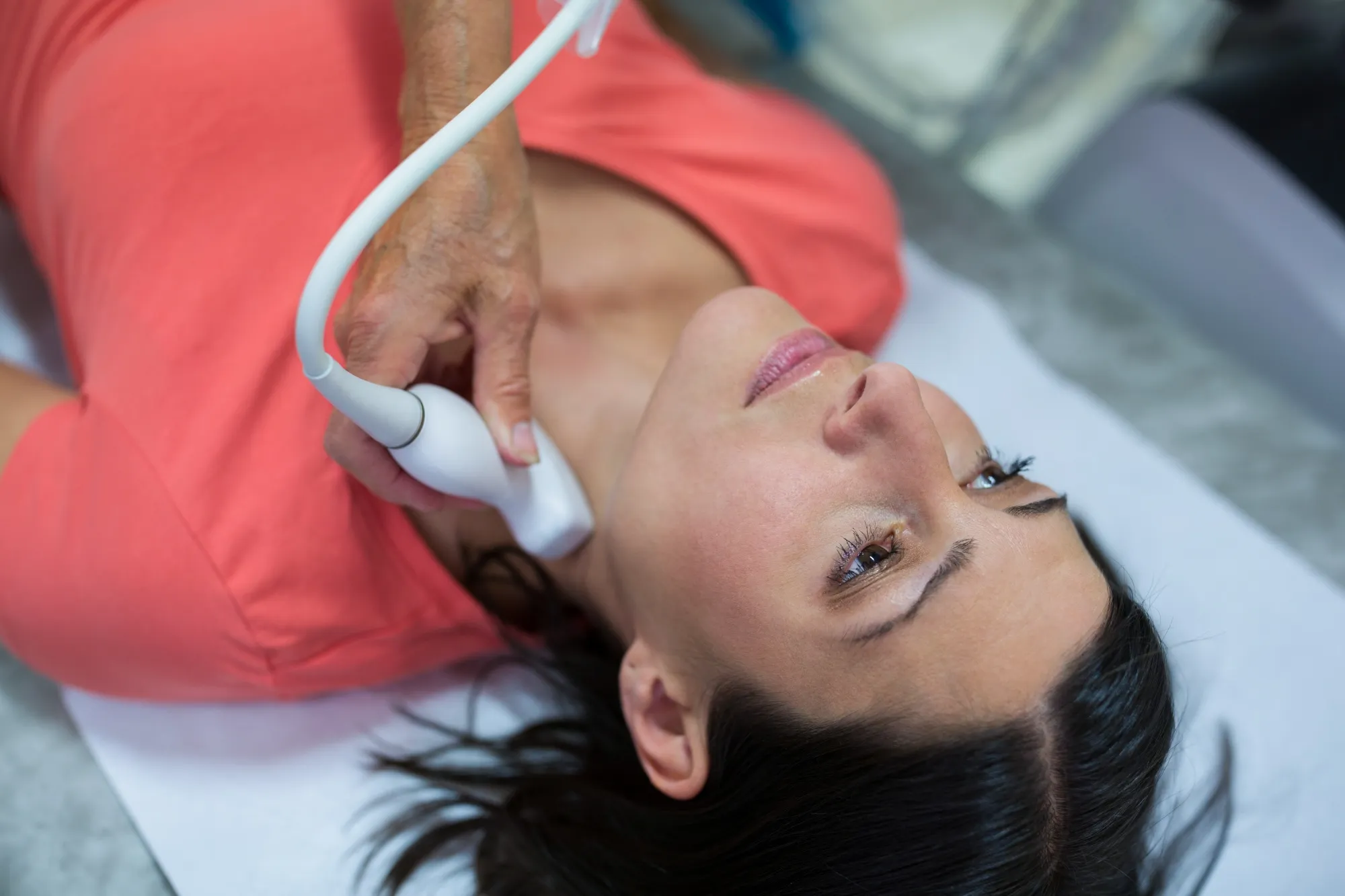
A thyroid ultrasound is a non-invasive, radiation-free imaging procedure that takes approximately 15 to 20 minutes. No preparation is required. The patient lies down, and the sonographer or specialist applies gel to the neck before using the ultrasound probe to visualise the thyroid gland.
The scan assesses each nodule’s size, composition, echogenicity, shape, margins, and any calcifications. These five features are scored to produce a TIRADS classification from TR1 to TR5. TR1 and TR2 indicate a benign appearance requiring no further investigation.
TR3 is mildly suspicious and is typically followed up with a repeat ultrasound in one to two years. TR4 and TR5 meet the criteria for FNA biopsy recommendation when the size threshold is also met. For a detailed explanation of TIRADS scores and what they mean on a radiology report, the thyroid nodule symptoms article in this blog covers each category with full context.
Thyroid Blood Tests: TSH, Free T4, and More
Blood tests are a complementary component of thyroid evaluation, not a replacement for ultrasound. The key markers used in thyroid assessment are:
- TSH (thyroid-stimulating hormone): the primary marker for overall thyroid function. A suppressed TSH may indicate a hyperfunctioning or “hot” nodule.
- Free T4 and Free T3: assess circulating hormone levels.
- Thyroglobulin: used primarily for post-operative monitoring in thyroid cancer patients rather than initial screening.
- Calcitonin: measured in specific contexts, particularly when medullary thyroid cancer is suspected.
Blood tests do not detect nodules; they assess whether the thyroid gland is functioning normally and provide context that informs clinical decision-making alongside the ultrasound findings.
What to Expect at Your ENT Plus Screening Appointment
An ENT Plus thyroid nodule screening appointment begins with an in-clinic thyroid nodule ultrasound reviewed personally by Dr. Soma Subramaniam, who assigns the TIRADS classification and discusses the findings directly with the patient. Where an FNA biopsy is clinically indicated and appropriate on the same visit, this can be performed in-clinic on the same day.
The Bethesda result is interpreted at a follow-up appointment, with a full explanation of the category and the management pathway it indicates. Surgical management is available at ENT Plus for patients whose Bethesda result indicates the need. ENT Plus is accredited under mostl major integrated shield insurers.
Thyroid Nodule Biopsy in Singapore: When Is It Recommended?

FNA biopsy is recommended for thyroid nodules classified as TR4 or above on TIRADS when they meet the relevant size threshold. TR4 nodules over 1.5cm and TR5 nodules over 1cm are the standard criteria. Thyroid nodule biopsy in Singapore follows the same internationally validated thresholds used globally, applied within the clinical context by the treating specialist.
FNA biopsy provides the Bethesda classification that drives all subsequent management decisions. Without a biopsy, the TIRADS score provides a probability estimate but not a tissue-based diagnosis.
When TIRADS Score and Nodule Size Meet the Biopsy Threshold
The clinical pathway from screening to biopsy follows a clear sequence:
- Nodule identified on ultrasound and assigned a TIRADS score
- If TR4 or TR5 and the size threshold are met, the ENT specialist recommends an FNA biopsy
- Ultrasound-guided FNA performed in-clinic, cell sample sent for cytological analysis
- The Bethesda result is returned in 3 to 5 working days
- Management recommendation issued: watchful waiting, repeat biopsy, or surgery based on the Bethesda category
When Symptoms or Rapid Growth Warrant Earlier Biopsy
In some cases, a biopsy is recommended before the standard size thresholds are met. A nodule causing compressive symptoms, including difficulty swallowing, persistent voice changes, or breathing difficulty, warrants earlier investigation regardless of TIRADS score. A nodule that has grown more than 20 per cent on surveillance imaging is also referred for earlier biopsy review.
An earlier biopsy in these circumstances is a precautionary measure to ensure the right management decision is made promptly. It is not a confirmation that cancer is present.
Cost and Insurance for Thyroid Nodule Screening and Biopsy in Singapore
Thyroid ultrasound screening costs vary by provider. FNA biopsy is classified as a medically necessary procedure under MOH’s Table of Surgical Procedures (TOSP) and is eligible for MediSave withdrawal and coverage under most Integrated Shield Plans. Patients should confirm their individual policy coverage with their insurer before the procedure.
Thyroid nodule biopsy in Singapore is managed differently from routine screening: a medically indicated biopsy following a specialist referral is a claimable procedure, while routine wellness screening ultrasound not linked to a medical indication is typically an out-of-pocket expense.
MediSave and Integrated Shield Plan Coverage
FNA biopsy and any associated surgical pathology are covered under the MOH TOSP framework, making them eligible for MediSave withdrawal. Patients with Integrated Shield Plan riders typically have significant coverage, with co-payment in the region of 5 per cent for procedures performed by an accredited specialist in an approved facility.
Routine thyroid ultrasound conducted as part of a wellness or corporate health screening package, without a prior specialist referral or documented medical indication, is generally not covered by MediSave or an Integrated Shield Plan and is paid out of pocket.
Where a GP or specialist has formally referred the patient for a medically indicated thyroid ultrasound, coverage may apply. Patients are advised to check with their insurer before the appointment. ENT Plus provides a transparent cost breakdown before any procedure and handles pre-authorisation and direct billing with all major insurers including Prudential, AIA, AXA, Great Eastern, and Singlife.
Conclusion About Thyroid Nodule Screening in Singapore
Thyroid nodule screening in Singapore provides the structured evaluation pathway that converts an uncertain finding into a clear management plan. Whether the nodule was found incidentally during a corporate health check or during a proactive ultrasound for a high-risk individual, the process follows the same evidence-based TIRADS framework.
For patients who have received a thyroid nodule finding on a screening report, or who are seeking thyroid nodule biopsy in Singapore, Dr. Soma Subramaniam at ENT Plus provides in-clinic thyroid nodule ultrasound with personal TIRADS review, ultrasound-guided FNA biopsy for nodules meeting the criteria, and full thyroid surgery in Singapore for cases where the Bethesda result indicates the need.
Book a thyroid nodule screening consultation with ENT Plus in Singapore to get a clear, expert assessment of your findings and the pathway forward.
Frequently Asked Questions About Thyroid Nodule Screening Singapore
What Does Thyroid Nodule Screening Involve in Singapore?
Thyroid nodule screening in Singapore typically begins with a thyroid ultrasound, which assesses the gland for nodules and assigns each a TIRADS score. Blood tests may also be ordered to evaluate thyroid function. If a suspicious nodule is found, an FNA biopsy is recommended. ENT Plus offers in-clinic ultrasound screening and same-appointment FNA where clinically appropriate.
Who Needs Thyroid Nodule Screening?
Individuals with a palpable neck lump, a family history of thyroid cancer, prior neck radiation, or symptoms such as difficulty swallowing or voice changes should seek thyroid nodule screening. Those undergoing routine health screening may also have nodules detected incidentally on ultrasound. High-risk individuals should discuss proactive screening with their ENT specialist or GP.
Is Thyroid Nodule Biopsy Covered by MediSave in Singapore?
Yes. FNA biopsy for a thyroid nodule is classified as a medically necessary procedure under MOH’s Table of Surgical Procedures, making it eligible for MediSave withdrawal. Most Integrated Shield Plan holders with riders will also have significant coverage. ENT Plus handles pre-authorisation and direct billing with all major insurers.
How Long Does Thyroid Nodule Screening Take?
A thyroid ultrasound typically takes 15 to 20 minutes. If an FNA biopsy is performed on the same visit, allow approximately 45 minutes to one hour in total, including consultation time. Results from FNA are typically available within 3 to 5 working days. A follow-up appointment is scheduled to review findings.
What Happens If a Nodule Is Found During Thyroid Screening?
The nodule is assessed and classified using the TIRADS scoring system based on its ultrasound features. TR1 and TR2 nodules are benign in appearance and monitored with periodic ultrasound. TR3 nodules are mildly suspicious and typically rescanned in one to two years. TR4 and TR5 nodules meeting size thresholds are referred for FNA biopsy to determine the Bethesda category.
How Often Should I Have a Thyroid Nodule Scan in Singapore?
Frequency depends on the TIRADS classification assigned at the previous scan. TR1 and TR2 nodules typically require no routine surveillance. TR3 nodules are rescanned in one to two years. After a benign Bethesda II FNA result, surveillance is usually annual or biennial, depending on the clinical picture. A specialist will advise on the appropriate interval for each case.
Can I Get Thyroid Nodule Screening in Singapore Without a GP Referral?
Yes. Patients may book a direct consultation with an ENT specialist at ENT Plus without a GP referral. A GP referral is not required to access specialist care in Singapore’s private healthcare system. However, some Integrated Shield Plans require a referral letter for insurance reimbursement, so patients should confirm their policy requirements before the appointment.
What Is the Difference Between Routine Health Screening and Specialist Thyroid Screening?
Routine health screening ultrasounds are designed to detect incidental findings across multiple organs and are not specifically optimised for thyroid nodule evaluation. A specialist thyroid screening at ENT Plus uses a dedicated thyroid ultrasound protocol with TIRADS classification assigned directly by the treating specialist, who can also perform FNA biopsy and advise on the full management pathway in the same appointment.