Occasional nosebleeds are common and usually harmless. But when bleeds become frequent, heavy, or difficult to stop, it is worth understanding why. Meet Dr Soma, a Senior ENT Consultant fellowship-trained in endoscopic sinus and skull base surgery at The Ohio State University, USA, for a careful assessment of epistaxis in Singapore.
From identifying the underlying cause to conservative measures and minor in-clinic procedures, we can help you find a clear, personalised way to manage your nosebleeds. If bleeding is very heavy or will not stop, please seek urgent medical care.
A nosebleed, known medically as epistaxis, happens when one of the small blood vessels inside the nose is disturbed and bleeds. The nasal lining carries many tiny, delicate vessels that sit close to the surface, which is why bleeding can start easily.
Most nosebleeds come from the front of the nose (anterior) and settle with simple first-aid measures. Less commonly, bleeding comes from deeper towards the back of the nose (posterior), which can be heavier and usually needs assessment by a specialist.
Please seek urgent or emergency care if a nosebleed is very heavy, will not stop after 10 to 15 minutes of firm pressure, or is accompanied by faintness or difficulty breathing. It is worth considering a specialist assessment if you notice:

Nosebleeds can arise for many reasons, and often more than one factor is involved. Understanding the likely cause helps guide the most appropriate care. Some of the more common contributors include:
Dry or less humid climates, dry indoor air, air-conditioning, nose-picking, or a knock to the nose can dry out or disturb the delicate blood vessels in the nasal lining, which may lead to bleeding.
Most nosebleeds start from small blood vessels near the front of the nasal septum. These are usually easier to see and tend to settle with simple first-aid measures.
Less commonly, bleeding arises from deeper vessels towards the back of the nose. These can be heavier and harder to control, and generally need assessment by a specialist.
Medications such as aspirin, warfarin, or other anticoagulants, as well as some supplements, can make nosebleeds more likely or more difficult to stop. Prescribed medication should never be stopped without medical advice.
High or poorly controlled blood pressure may contribute to nosebleeds in some people and can make an episode harder to settle.
Recurrent bleeding can sometimes be linked to nasal conditions such as inflammation, a deviated septum, growths, or previous nasal surgery, which is why persistent nosebleeds are worth evaluating.
While most nosebleeds are minor and settle on their own, some situations are worth reviewing with a specialist:
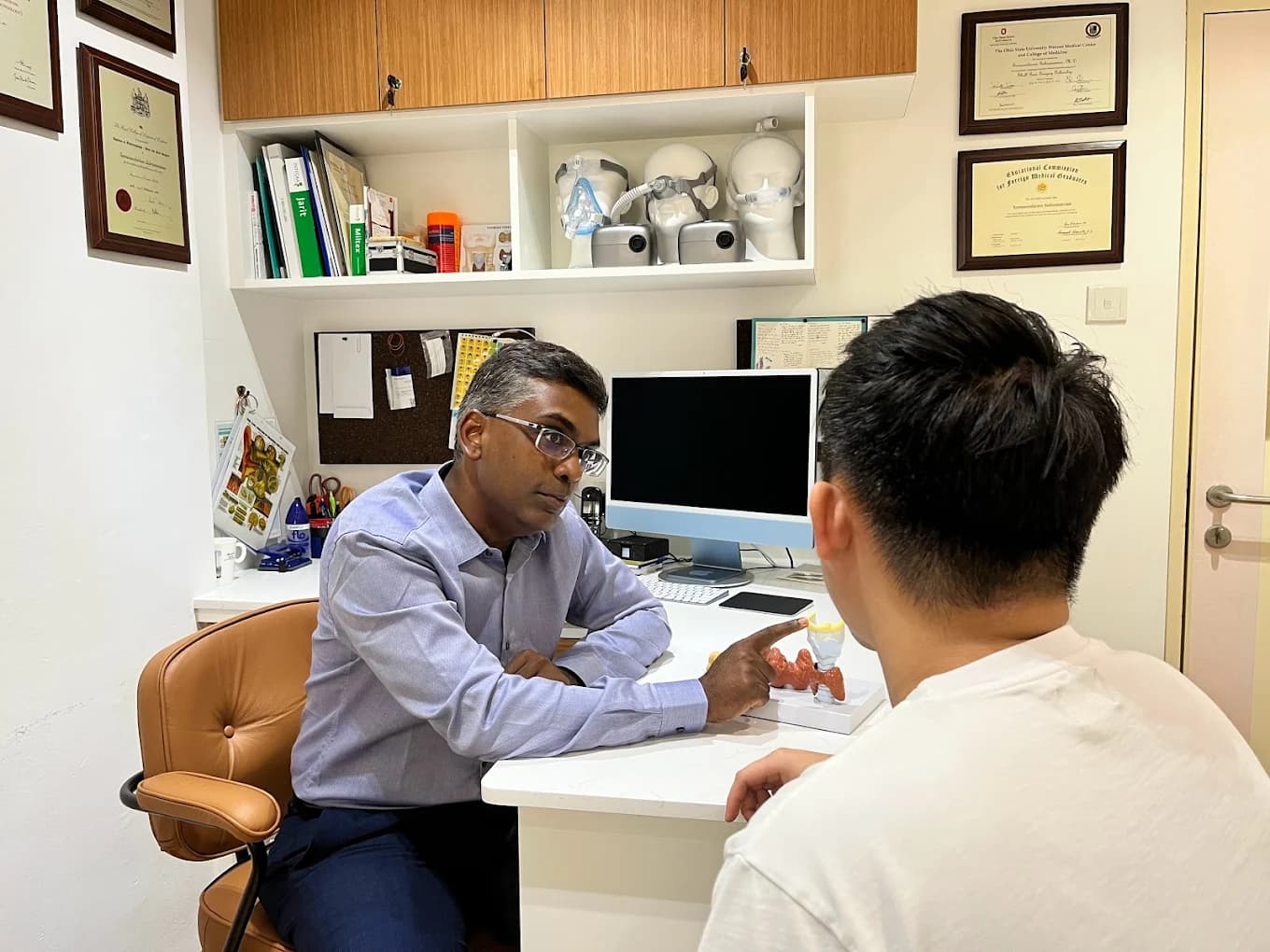
Based on your history and examination, Dr Soma will recommend a tailored plan that begins with conservative measures and, where needed, progresses to a minor in-clinic procedure.
The first priority is to control any active bleeding and understand why it is happening. Depending on your history and examination, this may include:

When nosebleeds are recurrent, or a specific bleeding point can be identified, a minor procedure in the clinic may be suggested. Depending on your assessment, Dr Soma may recommend:
Nasal Endoscopy Assessment
A thin endoscope is passed gently into the nose to examine the nasal passages closely and accurately diagnose the exact site of bleeding.
Nasal Cautery
If a specific bleeding vessel is found near the front of the nose, it may be sealed using chemical or electrical cautery. This is typically a brief procedure carried out in the clinic under local anaesthesia.
Nasal Packing
In some cases, dissolvable or removable packing may be placed to apply pressure and help control bleeding, particularly for heavier or posterior bleeds.
Follow-Up and Onward Care
Dr Soma will advise on aftercare and follow-up. If further investigation or treatment of an underlying condition is needed, this will be discussed with you.
By identifying the likely cause and matching it to the right care, a specialist-led approach aims to give you:

Dr Soma is a Senior ENT Consultant with a hybrid training background spanning European, Singaporean, and North American medical systems, including fellowship training in endoscopic sinus and skull base surgery at The Ohio State University, USA, and has managed a wide range of nasal and sinus conditions over many years of practice.
Rather than treating nosebleeds in isolation, Dr Soma looks for the underlying cause, using nasal endoscopy where appropriate, so that your care plan is matched to your particular situation.
Dr Soma is fully accredited by the Singapore Ministry of Health (MOH) and the Singapore Medical Council (SMC).
Administrative support to obtain insurance approvals for surgery and admissions is provided by the clinic support team.
Our clinics are located at Paragon Medical Centre (Orchard) and Parkway East Specialist Hospital (Joo Chiat) for ease of access.
From obtaining a Letter of Guarantee (LOG) from your insurer to securing a pre-authorisation certificate, we’ll do the necessary paperwork for you.
Shield Plans:





Corporate Plans:






A thorough, unhurried consultation with Dr Soma, a Senior ENT Consultant fellowship-trained in endoscopic sinus and skull base surgery at The Ohio State University, USA.
A careful review of your history and an examination of the nasal passages, which may include nasal endoscopy to look for a bleeding point or underlying cause.
A personalised plan that may combine conservative measures with a minor in-clinic procedure where appropriate, along with clear guidance on when to seek urgent care.
If your nosebleeds are recurrent, heavy, or difficult to stop, our team is ready to provide a careful assessment and practical guidance on managing epistaxis in Singapore.
Recurrent nosebleeds have many possible causes, including dry air, minor trauma, blood-thinning medication, raised blood pressure, and underlying nasal conditions. A specialist assessment can help identify the likely cause in your case and guide the most appropriate management.
Sit upright, lean slightly forward, and pinch the soft part of the nose just below the bony bridge for at least 2 to 3 minutes at a time, up to 10 to 15 minutes in total without releasing. Breathe through your mouth and avoid tilting your head back. If the bleeding is very heavy, or does not stop after this, please seek urgent medical care.
It is reasonable to seek an assessment if your nosebleeds are frequent, heavy, difficult to stop, appear to come from the back of the nose, or occur alongside other symptoms such as nasal blockage. Persistent or recurrent bleeding is worth evaluating to look for any underlying cause.
Most nosebleeds are minor and settle on their own. However, heavy or persistent bleeding, bleeding that will not stop with firm pressure, or bleeding accompanied by faintness or breathlessness may need urgent care. A specialist can also assess recurrent bleeds for any underlying condition.
A specialist consultation at ENT Plus starts from about $180. The final cost depends on the assessment and any procedures required. Our clinic team can help you understand your Integrated Shield Plan coverage, and eligible procedures may be claimable through Medisave where applicable.

ENT PLUS Specialist Centre Singapore
MBBCh (IRE) | DOHNS (ENG) | MMED-ORL (NUS) | FRCS-ORL (ENG)
Consultant ENT Specialist and Surgeon
Your Partner in Sinus, Allergy and ENT Health
Dr Soma Subramaniam is a MOH-accredited ENT specialist with fellowship training in endoscopic sinus and skull base surgery. He is Past President of the Singapore ENT Society and Founding President of the ASEAN Rhinologic Society. Dr Soma is committed to patient care, teaching, and advancing ENT knowledge through research and training the next generation of specialists.
321 Joo Chiat Place #05-01 Parkway East Specialist Hospital
Singapore 427990
Opening Hours
Monday–Friday: 9am – 5pm
Saturday: 9am – 12.30pm
290 Orchard Road #09-20/21 Paragon Medical Centre
Singapore 238859
Opening Hours
Monday–Friday: 9am – 5pm
Saturday: 9am – 12.30pm
Phone
+65 6517 9776
+65 6320 0353
(Calls only available during clinic opening hours)
+65 9856 8391
(Messaging only for appointment-related matters, no calls)
enquiry@entplus.sg